AI Coding Tools Merging: What’s Actually Happening in 2026
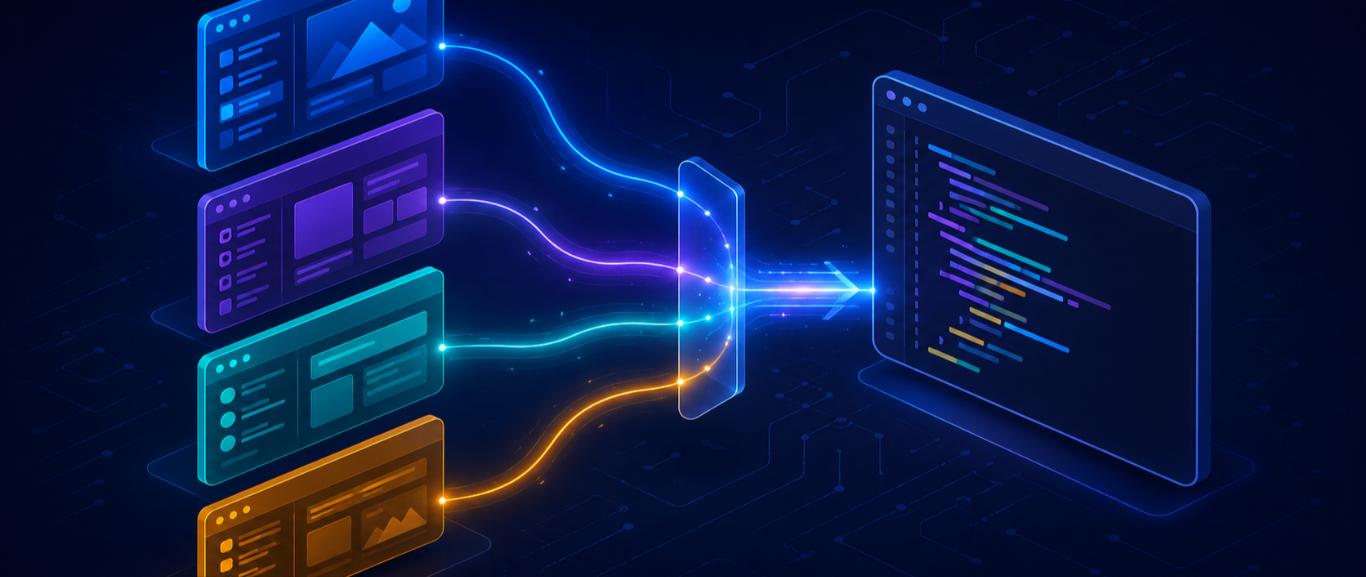
If you’ve searched “AI coding tools merging,” you’ve probably noticed something odd. Cursor, Claude Code, GitHub Copilot, and OpenAI Codex keep showing up together in the same sentences. Not as rivals fighting for the same seat, but as pieces of one workflow.
That’s not a coincidence, and it’s not marketing spin. It’s a real shift in how developers build software, and it happened faster than most people in the industry expected.
It’s Not a Merger. It’s a Convergence.
Let’s clear this up first, because the phrase “merging” is misleading. There’s no acquisition here. Anthropic didn’t buy Cursor. OpenAI didn’t buy Anthropic. Nobody signed a deal.
What’s happening instead is that these tools are settling into different jobs. Each one got good at one specific part of coding, and now they talk to each other through shared protocols instead of competing head-on. The result is a composable AI stack, not a single winner-take-all coding copilot.
Think of it like your home network. You don’t buy one device that’s a router, modem, and Wi-Fi extender all in one. You buy three separate boxes that each do their job well, and they connect. AI coding tools are heading the same direction.
Why This Term Blew Up in Early 2026
Three things happened within weeks of each other in spring 2026, and together they made “AI coding tools merging” a search people suddenly cared about.
Cursor shipped version 3, nicknamed Glass, replacing its old Composer panel with an entire window built for managing multiple AI agents at once. That’s a big shift away from being “just an editor.”
Around the same time, OpenAI released an official plugin that runs Codex directly inside Claude Code, a competitor’s product. That’s almost unheard of in software. And separately, Claude Code crossed a milestone: a 46% “most loved” rating among developers, well ahead of Cursor and GitHub Copilot.
Put those three together and it looks, from a distance, like the market is consolidating around one winner. It isn’t. It’s splitting into layers, and each tool is claiming its own layer.
The Four-Layer Stack Developers Are Actually Using
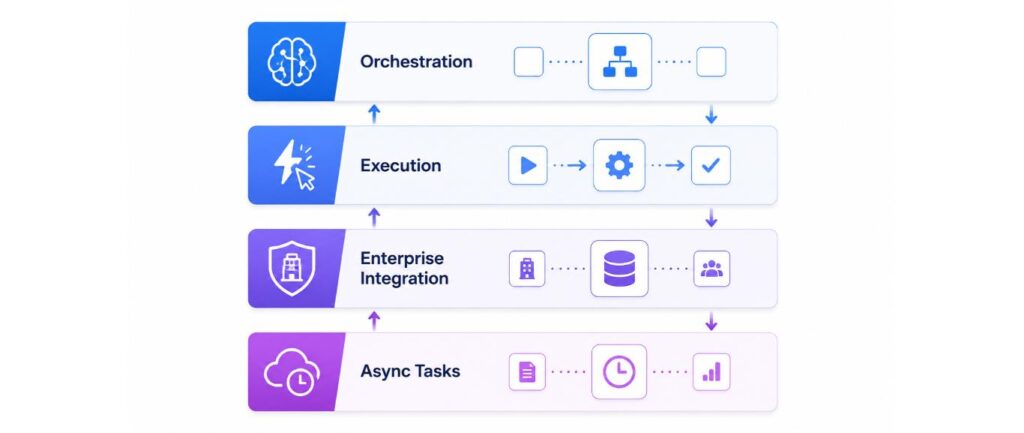
Here’s the practical breakdown of what’s forming in 2026. Four tools, four distinct jobs, and most serious developers now use more than one AI-native IDE or autonomous coding agent at a time.
Claude Code: The Orchestration Layer
Claude Code handles the big-picture thinking. It reads across an entire codebase, plans multi-file changes, and can direct other AI agents to carry out parts of the work — a form of multi-agent orchestration that goes well beyond simple code completion.
Its edge comes from context size. Claude Opus 4.6 can process up to roughly 30,000 lines of code in one pass using its 1 million token window. That’s a level of whole-codebase understanding other tools haven’t matched yet.
On the SWE-bench coding benchmark, Claude Code scores around 80.8%, the highest of any tool in this comparison. It runs from the terminal rather than an IDE, which is why developers pair it with Cursor instead of replacing Cursor with it.
Cursor: The Execution Layer
Cursor is where most developers actually spend their day. It’s a full fork of VS Code, rebuilt from the ground up around AI pair programming, not a plugin bolted onto an existing editor.
In March 2026, Cursor shipped Composer 2, its own proprietary model built on Moonshot AI’s Kimi K2.5 foundation. It scored 73.7 on SWE-bench Multilingual, and it supports routing tasks across GPT-5.4, Claude Opus 4.6, and Gemini 3 Pro depending on the job.
Cursor 3 pushed further with an Agents Window that manages multiple parallel agents across local machines and cloud sandboxes. That’s a deliberate move away from being “just an editor with autocomplete.”
GitHub Copilot: The Enterprise Integration Layer
Copilot isn’t winning benchmark comparisons anymore. Both Cursor and Claude Code have passed it on raw coding capability. But it still has over 20 million cumulative users and something the others can’t easily replicate: deep GitHub and Azure integration plus IP indemnification for enterprise legal teams.
Its agent mode went generally available across VS Code and JetBrains in March 2026, and it added agentic PR review the same month. For companies already standardized on GitHub, Copilot is the lowest-friction entry point into AI-assisted development.
OpenAI Codex: The Async Task Layer
Codex has changed a lot since its early days powering the original Copilot. Today’s version runs in a secure cloud sandbox, handling long, unattended tasks as an autonomous coding agent: writing tests for an entire module, migrating a codebase, or clearing a backlog of issues.
It crossed 3 million weekly active users in early 2026, up from 2 million a month earlier. Developers use it for the work they don’t want to babysit, while Cursor and Claude Code handle the tasks that need real-time attention.
The Protocol Making All of This Possible: MCP
None of this layered stack works without a shared language, and that language is MCP, the Model Context Protocol. Anthropic released it as open source in November 2024 to solve AI tool interoperability, the ability for one agent to hand work to another without custom glue code.
By March 2026, MCP had roughly 97 million monthly SDK downloads and more than 1,000 community-built servers. OpenAI, Google DeepMind, Microsoft, Cloudflare, and Sourcegraph have all adopted it. A companion Agent-to-Agent (A2A) protocol now lets agents delegate tasks directly, and rivals like Google’s Antigravity platform and the Windsurf editor (built from Google’s 2025 licensing deal) are converging on the same agentic coding pattern.
Before MCP, connecting any AI tool to any data source meant writing custom integration code every single time. MCP replaced that mess with one standard, the same way USB-C replaced a drawer full of mismatched charging cables.
In December 2025, Anthropic donated MCP to the Agentic AI Foundation under the Linux Foundation, with OpenAI and Block joining as co-founders. That move alone tells you this isn’t a one-company tool anymore. It’s shared infrastructure.

What the Data Actually Shows
It’s worth separating hype from measured results here, because the numbers are more mixed than the headlines suggest.
Controlled trials show AI coding tools speed up scoped, well-defined tasks by 30 to 55%. Stack Overflow’s 2025 survey found developers save around 3.6 hours a week on average, and daily AI users merge about 60% more pull requests.
But trust hasn’t caught up to adoption. Only 29 to 46% of developers say they fully trust AI-generated output, according to the same Stack Overflow data. And a 2025 Veracode study found 45% of AI-generated code contained at least one OWASP Top 10 vulnerability.
Organization-wide productivity gains tell a similar story. Teams that simply add AI tools to their existing process see roughly 10% improvement. Teams that redesign their workflow around AI, with real code review and security gates, see 30 to 35% gains, according to Deloitte’s 2026 outlook.
The takeaway: the tools are genuinely useful, but only when paired with review discipline. Speed without governance just means shipping bugs faster.
The Rise of Cross-Model Review
One of the newest developments is what some engineers call adversarial review, a form of AI code review that solves a problem that’s been quietly ignored until now.
When the same model writes your code and reviews it, it’s grading its own homework. It shares the same blind spots it had while writing. A second model, from a different company, trained differently, catches things the first one misses.
OpenAI’s Codex plugin for Claude Code includes a command for exactly this: it pressure-tests decisions around authentication, data loss, and race conditions using a model that had no hand in writing the original code.
This cross-provider review pattern is still new, but it’s the most promising fix yet for a problem every developer using AI tools has quietly run into.
What This Means If You’re Choosing Tools Today

You don’t need all four tools. Most individual developers are landing on a simple combination: Cursor for daily execution, plus Claude Code for anything that touches multiple files or needs deeper reasoning.
That pairing runs about $37 to $40 a month and covers the overwhelming majority of coding work a single developer does. It’s become the default stack among senior developers, according to multiple 2026 surveys.
If you’re on a tight budget, GitHub Copilot Pro alone at $10 a month is still a reasonable starting point, especially if your team already lives inside GitHub.
For teams running large, repetitive, or background-heavy work, like migrations or bulk test generation, adding Codex through a ChatGPT Plus subscription rounds out the stack without much added cost.
How Engineering Teams Should Actually Respond
Don’t start by picking a favorite tool. Start by mapping which of the four layers your team is missing.
If nobody on your team has an AI-native editor, that’s your execution gap. If nobody can reason across your full codebase in one pass, that’s your orchestration gap. If your compliance team has no audit trail for AI-generated code, that’s a governance gap, and it’s the one most teams skip.
Before expanding usage, put basic guardrails in place: treat every AI-generated pull request as a draft that needs human review, run automated security scans before merge, and log agent actions for audit purposes. Teams that set this up before scaling consistently outperform teams that scale first and clean up later.
What Could Slow This Trend Down
This shift isn’t guaranteed to keep moving smoothly, and it’s worth being honest about the friction points.
Pricing stacks up fast. Running Cursor, Claude Code, and Codex together can push past $57 a month per developer once you add enterprise tiers. For a 50-person engineering team, that’s real budget, and finance teams are starting to ask for proof of return, not just adoption numbers.
Security is the bigger issue. With nearly half of AI-generated code showing known vulnerability patterns, any company scaling up usage without a review process is quietly building up risk. A few high-profile breaches traced back to unreviewed AI code could slow enterprise adoption regardless of how good the tools get.
There’s also a skills question nobody talks about enough. Junior developers who lean on orchestration tools from day one may never build the debugging instincts that come from working through problems manually. Senior engineering leads are already flagging this as a training gap to plan around, not just a tooling decision.
None of this reverses the trend. But it does mean the “merging” story has real costs attached, and teams moving fast without addressing them are taking on debt they’ll eventually have to pay down.
Frequently Asked Questions
Are AI coding tools actually merging in 2026?
Not through acquisitions. Cursor, Claude Code, GitHub Copilot, and Codex are converging into a layered stack, each owning a different part of the workflow, connected by the MCP protocol rather than corporate ownership.
What’s the best AI coding tool right now?
There isn’t one best tool. Claude Code leads on complex, multi-file reasoning. Cursor leads on daily execution and editing speed. Copilot leads on enterprise compliance. Codex leads on unattended background tasks.
Do I need to use more than one AI coding tool?
Not necessarily, but most senior developers do. The most common setup pairs Cursor for daily work with Claude Code for harder problems, at roughly $37 to $40 a month combined.
Is AI-generated code safe to ship without review?
No. Around 45% of AI-generated code has been found to contain known vulnerability patterns. Every AI-assisted pull request should go through the same review and security scanning as human-written code.
What is MCP and why does it matter?
MCP, the Model Context Protocol, is the open standard that lets different AI coding tools share context and hand off tasks to each other. It’s the reason these tools can work together without one company acquiring another.
What is agentic coding?
Agentic coding refers to AI systems that don’t just autocomplete lines but plan, write, test, and fix code across multiple files with minimal human input. Claude Code, Cursor’s Composer agents, and OpenAI Codex are all examples of this shift from autocomplete to autonomous coding agents.
The Bottom Line
AI coding tools aren’t consolidating into one winner, and they’re probably not going to. They’re specializing, the same way infrastructure tools did before them: one tool for metrics, one for dashboards, one for alerts, all connected instead of combined.
The developers getting the most out of this shift aren’t the ones debating which single tool is best. They’re the ones who figured out which tool belongs at which layer, and built a workflow instead of a preference.